Fire and Forget: The Background Job Pattern That's Quietly Burning Down Your System
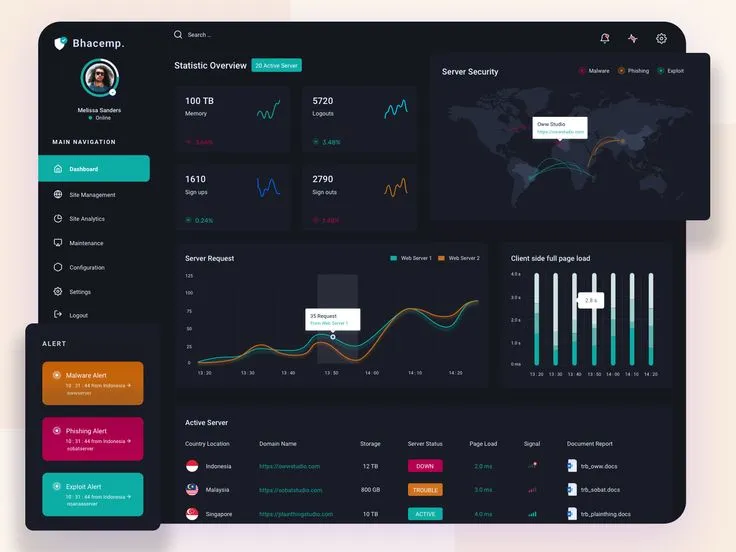
Photo: server room dark background monitoring dashboard, via i.pinimg.com
There's a specific kind of confidence that comes right after you offload something to a background job. You return a 200, the UI spins happily, and you tell yourself the hard part is done. The queue will handle it. That's the whole point.
Except sometimes the queue doesn't handle it. Sometimes it silently chokes, retries into oblivion, or finishes in a technically-successful state that means absolutely nothing useful happened. And because nothing in your dashboard is on fire, you don't find out until a user emails asking why their invoice never arrived — three weeks later.
This is the async graveyard. Most teams have one. Almost nobody talks about it until it's too late.
The Illusion of Delegation
Background jobs feel like responsible engineering. You're not blocking the request cycle. You're handling scale. You're decoupling concerns. All of that is true — but it comes with a hidden trade: you're also decoupling visibility.
When a synchronous operation fails, it fails loudly. The stack trace shows up, the request errors out, someone notices. When an async job fails, it often disappears into a retry queue, hits a dead-letter bucket, or just... stops. Depending on your setup, the failure might get logged somewhere no one reads. Or it might not get logged at all.
The job ran. The job failed. Nobody knows.
This pattern is everywhere. Email delivery workers that silently drop messages when a third-party API throttles them. Data sync jobs that partially complete and mark themselves done. Webhook processors that handle the happy path beautifully and have zero logic for malformed payloads. Each one is a small landmine sitting in a queue, waiting.
Why Monitoring Feels Like Overkill (Until It Doesn't)
Here's the thing about async monitoring: it feels unnecessary right up until it becomes essential. Early in a project, your queue is small, your job types are simple, and you're watching everything manually anyway. Adding job-level observability feels like premature optimization.
So you skip it. You tell yourself you'll add it later, when things get complex. But by the time things get complex, you've got fifteen different job types, three different queue backends, and a production incident teaching you that "later" already passed.
The psychological trap is that background jobs are designed to be invisible. That's their whole pitch. So when they go wrong invisibly, it feels like they're working as intended — right up until the moment you realize they aren't.
Teams that have been burned by this tend to describe the same experience: everything looked fine. Metrics were green. Queue depth wasn't alarming. Then someone pulled a thread and found months of silently failed jobs that had real downstream consequences.
The Patterns That Mask Failure
Not all async failures are obvious. Some of the most dangerous ones look like success.
Swallowed exceptions. A job catches a broad exception, logs a warning, and returns a success status because the developer didn't want a retry storm. The job technically completed. Nothing meaningful happened.
Phantom retries. Your queue retries a failed job five times over six hours, eventually exhausting attempts and dropping it into a dead-letter queue. The retry logic worked perfectly. The original task never did. If nobody's draining that dead-letter queue, you've got a graveyard.
Partial success states. A job processes 900 out of 1,000 records, hits a rate limit, and marks itself complete because the loop finished without throwing. The 100 records that didn't get processed are just... gone. No alert. No retry.
Duplicate execution. Your job isn't idempotent, your queue delivers it twice during a network hiccup, and now you've sent the same notification twice or charged a card twice. The job finished. It finished too many times.
Each of these patterns is common. Each one is avoidable.
What Early Adopters Actually Do
Developers who've shipped production systems at scale tend to treat async jobs with the same skepticism they'd apply to any external dependency. They assume failure. They build for visibility.
A few approaches that consistently show up in teams that don't get burned:
Explicit completion tracking. Don't just log that a job started. Write a record when it finishes — with a status, a timestamp, and enough context to reconstruct what happened. A simple database table or even a Redis hash can give you a queryable history that your queue dashboard never will.
Dead-letter queue alerts. If something lands in your DLQ, you should know within minutes, not weeks. This is one of the cheapest, highest-value alerts you can set up. Most teams don't have it.
Idempotency as a default. Every job should be safe to run twice. This sounds obvious but requires intentional design. If your job doesn't check whether it already ran before doing the work, you're one network blip away from a duplicate-action incident.
Heartbeat patterns for long-running jobs. A job that's supposed to take two minutes and is still running after twenty isn't healthy — it's stuck. Heartbeat signals let you detect this without waiting for a timeout to eventually fire.
Regular DLQ audits. Schedule a recurring task — even a manual one — to review dead-letter queues. What's in there? Why? Are the same job types failing repeatedly? This is one of the most underrated debugging rituals in backend engineering.
The Real Cost of Not Looking
Silent async failures don't usually cause catastrophic outages. That's part of what makes them dangerous. They cause slow, invisible degradation. Emails that don't send. Reports that never generate. Sync jobs that fall behind by days before anyone notices the data is stale.
By the time the impact surfaces, the window to diagnose it cleanly is often gone. Logs have rotated. Queue history has expired. You're left doing forensic archaeology on a system that looked healthy the whole time.
The teams that avoid this aren't necessarily using fancier tools. They've just internalized a simple principle: a job that ran is not the same as a job that worked. The queue is not your monitor. Success status is not the same as successful outcome.
Treat Your Queue Like a Dependency, Not a Dumping Ground
Background jobs are a powerful primitive. They're also one of the easiest places to accumulate invisible technical debt — not because developers are careless, but because the failure modes are genuinely subtle and the feedback loops are slow.
The fix isn't to stop using async patterns. It's to stop treating the queue as a black box you can trust without watching. Add observability early, before you think you need it. Build idempotency in from the start, not as a patch after the first incident. Know what's in your dead-letter queue at all times.
Your background jobs are doing real work. Make sure someone's checking if they finish.